
From our modern perspective, reading is considered to be an activity that is cut off from the world of everyday concerns. For us, it is as if the reading of Shakespeare and of literature can only have an effect on life after the book is closed. Yet, as we have seen, all these assumptions are qualified, if not contradicted, by early modern readers’ forms of engagement with Shakespeare’s text and with the world around them. There is life in the archives in the sense that it is possible to reconstruct the experience of reading Shakespeare from the traces and empirical evidence left in early books and manuscripts, even if we always have to remind ourselves that such reconstruction can only be incomplete and is certainly not devoid of subjectiveness. Moreover, what is striking in the evidence we have studied is the closeness between the reading experience and the immediate intellectual and mundane life of these early modern readers.
The evidence displayed here points to two perhaps unexpected conclusions: first, that reading Shakespeare was in a profound way an experience as vital as going to see his works performed (and one did not of course exclude the other). Second, that for many individuals Shakespeare was a crucial part of the elaboration of their ‘stylistics of existence’, but that this elaboration involved a vast interweaving of perspectives.
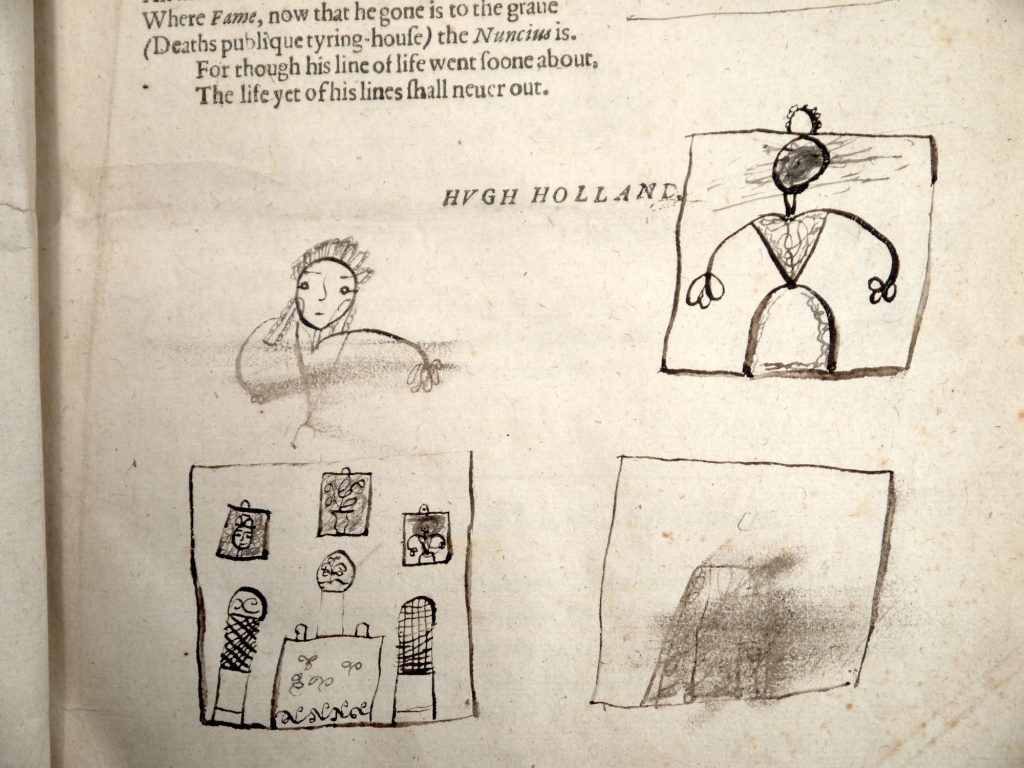
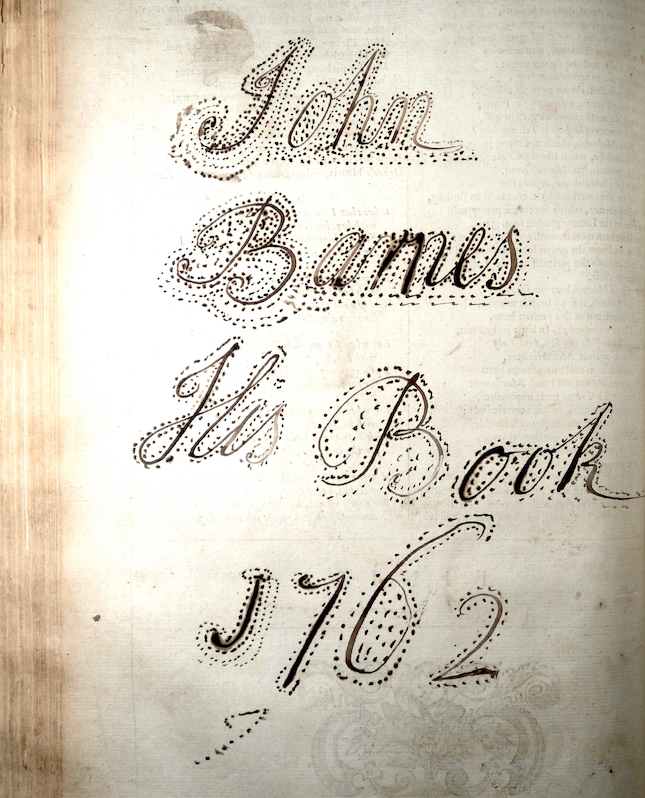
Let’s look at a few examples:
Descriptif de l’image
Descriptif de l’image